Saturday, September 27, 2014

Books about death, dying, and grief.

It's been a long while since I posted here but I felt like maybe this could be a useful post for people searching the internet for books about these subjects. Earlier this year, someone I loved died after a six month battle against terminal cancer. Grief wasn't foreign to me, nor was cancer, or even death at a younger than expected age. But as things go, this affected me more than anything in my life had before.

Not long after he was first diagnosed, I stopped being able to read anything fictional. Even my favourite authors, my favourite books. My brain was too focused on one thing to be able to get involved in a fictional tale, no matter how amazing it was or how beautiful the writing. So I started reading about death or, more specifically, how to help the dying.

In the weeks, months, or even years after a grief, you may have a compulsive desire to read about grief... Grieving people tend to read to put their minds squarely on their pain. they start ingesting books, articles, stuff from the internet, spiritual matter - anything to feed the empty space in their understanding. Anything with the word 'grief' grabs their attention. it's as though greiving persons are trying to make up for lost time, like cramming for a test they haven't studied for. [About Grief, by Ron Marasco & Brian Shuff]

My stepmum died from breast cancer six years ago, but it was never terminal. It was never you are going to die from this and there's nothing we can do. I've never had to deal with that in someone I love before and certainly not in such a short timeframe that he was given. I wanted to be there for him properly. I wanted to help as much as I could and especially wanted to be someone he could talk to about what was happening if he wanted to. But what do you say and what do you do when someone you love is dying? What do they want and need?

So I started reading.

Initially it started with the internet and reading articles about the type of cancer he had and blog posts from people with terminal cancer and what they want other people to do for them, but then I needed full books. I downloaded most of them on my Kindle, as that was easier to read on public transport and I didn't particularly want to deal with any strange looks from other people if they noticed I was reading books about dying. But I also ordered a bunch of books from Amazon that weren't available on the Kindle.

One of the things I wanted to know was how comfortable he would be talking to me about dying - was that something he would even want to do? Do people that are dying want to talk about what they're going through or do they want to avoid it? When is the right time to discuss these things and when is the right time to talk about other subjects? I wanted him to know he could talk about whatever he wanted with me, without feeling like I was asking questions he didn't want to answer. Most importantly, I wanted to be mentally prepared for those conversations, because the idea of him dying actually scared me more than anything and the last thing I wanted was to make him feel like it was too much for me to be able to discuss these things.

A dying person's world shrinks, narrowing to a few important relationships and the progress of his illness. When dying people aren't allowed to talk about what is happening to them, they become lonely, even amid loving, concerned people. [Final Gifts, by Maggie Callanan & Patricia Kelley]

This 'being unsure' didn't last long because I realised he was happy to talk about anything with me and I asked him countless questions about everything. I think he liked that I wasn't scared or uncomfortable talking about these subjects. I feel like I was able to give him someone to talk to who wasn't as close as his parents or siblings (so there was a level of him wanting to 'protect' them), but was also close enough to understand things like how heartbroken he was when he said, "I don't think I'm going to be able to come back to work," the first time I visited him in hospital.

Some of the books I found most helpful in trying to figure out how to help someone who is dying and understand what they need:
  • "Final Gifts: Understanding the Special Awareness, Needs, and Communications of the Dying" by Maggie Callanan and Patricia Kelley
  • "One You Love is Dying: 12 Thoughts to Guide You on the Journey" by James E Miller
  • "Nearing the End of Life: A Guide for Relatives and Friends of the Dying" by Sue Brayne
  • "Facing Death and Finding Hope" by Christine Longaker
  • "After the Darkest Hour" by Kathleen Brehony
  • "Dying Well" by Ira Byock
Often a dying person wants to make sense of their time on earth. they want to feel their life has mattered and their influence will not be forgotten. You can play a critical role by treating their memories as important and their reflections on life as valuable. [One You Love is Dying, by James E Miller]

One of the things I am most appreciative of is that I had the chance to tell him what he meant to me, how much his work inspired me, how much his training helped me, and how incredible I thought he was in his work when his work was such an important part of his life. I loved all of our conversations about life and death, learning so much about his life before I knew him, and all of the humour and talk about books and travel in between. Plus, getting to hear stories from his childhood and things like that was something wonderful to share. Being a close part of the last six months of his life will be something I will forever be grateful for. 

It is incredible how much happiness we sometimes had together after all hope was gone. How long, how tranquilly, how nourishingly, we talked together that last night! And yet, not quite together... You can't really share someone else's weakness or fear or pain. [A Grief Observed, by C. S. Lewis]

After he died, it switched from how to help him to how to help me, because no matter how much I tried to 'prepare' myself for it, I wasn't remotely ready when it happened. So I started reading about grief. It felt strange to me to feel so lost and unsure about how to deal with these emotions when I've felt true grief before: when my stepmum died and when two young lifelong family friends had died in tragic accidents. But this was somehow more difficult for a variety of reasons, one of which was dealing with work (which is how we met as colleagues originally) when normally work is an escape and "something else" to focus on for a while when you're dealing with a loss.

No one ever told me that grief felt so like fear. I am not afraid, but the sensation is like being afraid. The same fluttering in the stomach, the same restlessness, the yawning... At other times it feels like being mildly drunk, or concussed. There is a sort of invisible blanket between the world and me. I find it hard to take in what anyone says. Or perhaps, hard to want to take it in. It is so uninteresting... I dread the moments when the house is empty. If only they would talk to one another and not to me. [A Grief Observed, C. S. Lewis]

Some of the books I found most helpful in the first few months of grief were:
  • "About Grief" by Ron Marasco and Brian Shuff
  • "How to Go on Living When Someone You Love Dies" by Therese A Rando
  • "A Grief Observed" by C. S. Lewis
  • "Healing Grief, Finding Peace: 101 Ways to Cope with the Death of Your Loved One" by Louis E LaGrand
  • "From Grief to Peace: Mourning Your Loss" by Alexander Risten
  • "Experiencing Grief" by H Norman Wright
  • "Transcending Loss: Understanding the Lifelong Impact of Grief and How to Make It Meaningful" by Ashley Davis Bush (I recommend only reading this one after the acute grief stage has passed)
Another book I read was "Splitting the Difference: A Heart-Shaped Memoir" by Tre Miller-Rodriguez after I found her blog online and had a chat with the author. I loved this book, I loved Tre's writing, and I loved reading about her frank, brutal, and beautiful experiences of grief after her husband's sudden death at the age of 40 when she was just 34. The author had previous experience with loss when her brother died at the age of 18 as well. I definitely recommend this is anyone that has lost their significant other/someone they're in love with, but as long as you're not offended by a bit of swearing and adult content.

I've since been able to read a few fiction books, although mostly relating to death and grief as well. I re-read some of my favourite books: "The Fault in Our Stars" by John Green and "Paint it Black" by Janet Fitch and "The Time Traveler's Wife" by Audrey Niffenegger and "If I Stay" by Gayle Foreman. One new fictional book I read that really stood out to me as amazing is a young adult book, "Me Since You" by Laura Wiess. I've read a few of Laura's books before and always found her writing and her stories to be incredible. One thing I particularly loved in "Me Since You" was the protagonist's description of grief:

It's the perfect storm... and it hits like a wrecking ball, coming out of nowhere and slamming into your brain. It destroys everything. Your emotions are in shambles: one minute you're crying, the next you're laughing, the next you can barely lift your head for the agony. Life narrows: you don't care about stuff that used to matter and you overreact to the stuff that matters now. You need to be held, but you want to be left alone. Your short-term memory is shot. Every step is like slogging through a mud pit. Exhaustion hits at random and all you can do is sleep. You second-guess yourself constantly. You can't meet anyone's gaze for fear you'll see blame there, or suspicion, or judgment. You feel small, weak, guilty. You think weird thoughts, do strange things. Every nerve in your body is raw, but your brain is a foggy, unreliable mess. You can't see from crying and food has no taste, but all of a sudden you can smell a dirty sock three rooms away. Your moods are up, down, down, up, like a crazed, speeding, out-of-control rollercoaster you can't get off of, no matter how long or how awful the ride. And that's just the first three months.

Grief is such an isolating, lonely thing and I really found books (as well as reading blogs and becoming friends with the bloggers) have helped me immensely in my journey through it this last year or so. Yet another reason I am grateful to books and so glad I love them as much as I do.

The act of living is different all through. Her absence is like the sky, spread over everything.

Saturday, March 17, 2012

Wonder by R.J. Palacio

Release date: 15 February 2012
Rating: 10/10

If I found a magic lamp and I could have one wish, I would wish that I had a normal face that no one ever noticed at all. I would wish that I could walk down the street without people seeing me and doing that look-away thing. Here’s what I think: the only reason I’m not ordinary is that no one else sees me that way.

So when I was in my mum’s stomach, no one had any idea I would come out looking the way I look. Mom had had Via four years before and that had been such a “walk in the park” (Mom’s expression) that there was no reason to run any special tests. About two months before I was born, the doctors realized there was something wrong with my face, but they didn’t really think it was going to that bad. They told Mom and Dad that I had a cleft palate and some other stuff going on. They called it “small anomalies”.


Looks like I don’t have to write a book anymore, because this is the one I wanted to write.

Mom is beautiful, by the way. And Dad is handsome. Via is pretty. In case you were wondering.
 
While she was talking, I noticed Julian staring at me out of the corner of his eye. This is something I see people do a lot with me. They think I don’t know they’re staring, but I can tell from the way their heads are tilted.
 
She only hesitated for a millionth of a second, but I could tell the moment she saw me. Like I said: I’m used to it by now.
 
Mom always had this habit of asking me how something felt on a scale of one to ten. It started after I had my jaw surgery, when I couldn’t talk because my mouth was wired shut. They had taken a piece of bone from my hip bone to insert into my chin to make it look more normal, so I was hurting in a lot of places.
 
I hate the way I eat. I know how weird it looks. I had a surgery to fix my cleft palate when I was a baby and then a second cleft surgery when I was four, but I still have a hole in the roof of my mouth.
 
Rat boy. Freak. Monster. Freddy Krueger. E.T. Gross-out. Lizard face. Mutant. I know the names they call me. I’ve been in enough playgrounds to know kids can be mean. I know, I know, I know.
 
During every moment of reading Wonder, I felt like I’d been punched in the stomach, wanted to cry, felt significant amounts of anger at strangers, and happier than I have ever been purely for a book’s existence. The part where August gets hearing aids is my favourite part of the whole story.

 How can I describe what I heard when the doctor turned on my hearing aids? Or what I didn’t hear? It’s too hard to think of words. The ocean just wasn’t living in my head anymore. It was gone. I could hear sounds like shiny lights in my brain. It was like when you’re in a room where one of the lightbulbs on the ceiling isn’t working, but you don’t realise how dark it is until someone changes the lightbulb and you’re like, whoa, it’s so bright in here! I don’t know if there’s a word that means the same as “bright” in terms of hearing, but I wish I knew one, because my ears were hearing brightly now.

Quoting is the only way I can convey why this book means what it now does to me. This is the book I wanted when I was 12-15 years old. To feel less alone. To feel like I wasn’t the only one who was going through these things.

Everyone, of all ages, should read this book, because everyone's life would be improved for having known August Pullman.

Thank you, R.J., for writing Wonder for all children that have ever been born with birth defects and/or craniofacial syndromes. And thank you to Natalie, for making sure I knew about August - I love you for it. He really is a wonder.

“Mom? Am I always going to have to worry about jerks like that?” I asked. “Like when I grow up, is it always going to be like this?”

Thursday, May 5, 2011

If I Stay and Where She Went by Gayle Forman

Release Date: May 2009 (If I Stay); April 2011 (Where She Went)
Rating: 9/10

Sometimes you make choices in life and sometimes choices make you.

These two books are definitely among my favourite young adult books written in the last few years. Or ever. If I'd read these books when I was a teenager, it would have made my I-want-a-boyfriend-that-understands-my-insane-love-for-music so, so much worse. Adam would've had my heart.

I realize now that dying is easy. Living is hard.

Both books are about love, family, loss, death, survival, grief, music, and the passions in life that keep you going. The frank discussion of the process of grief in Where She Went was incredible, like nothing I had ever read before, even in an adult fiction novel. When Adam says "what is competition it is" about grief and when Mia wonders who was there for Adam when Mia lost all that she lost, they were some beautifully poignant moments. I decided to read If I Stay when it was released because the story sounded like it would be an emotional and inspiring read, but luckily I was also given a book about music. Little references throughout it, and to a lesser extent in Where She Went, to all types of music, but particularly the little punk jokes Mia's parents make and Mia's inability to understand nor care about "rock talk" made me happy.
 
Barrel of the gun, rounds one two three
She says I have to pick: choose you, or choose me
Metal to the temple, the explosion is deafening
Lick the blood that covers me
She’s the last one standing

Tuesday, March 29, 2011

Unbearable Lightness by Portia de Rossi

Release date: 1 November 2010
Rating: 10/10

I had to post a quick note about how incredible Portia de Rossi is. I have always loved her (especially her brilliance in  Arrested Development), but her book made her strength, inspiration, and beauty all the more apparent to me. It is not really a biography as such, to me, but the story of what it is like to live with an eating disorder, the reasons they can occur and the way a person in that situation thinks, as well as the way dieting can turn into 'disordered eating' without the person knowing.

I have never struggled with weight loss, been conscious of what I eat, or even considered any kind of diet. I was lucky enough to grow up in a house with a mother who instilled this within me, as eating was always a fun, healthy thing to do in our house. Despite this, Unbearable Lightness was inspiring to read and I deeply admire Portia, as being someone that doesn't like attention on her personally and is very self-conscious, for writing such a book and being so open about the struggles she had. I may not have had any kind of eating disorder, but I have been through other things that help me understand the mentality that goes into this kind of treatment of yourself, and the fact that Portia, as a "famous" person, has written such an honest account of her suffering when so many people will read (and judge) it is something truly amazing to me.

Portia made appearances on Ellen and Oprah regarding the book a few months ago. (I've been wanting this book for a while but couldn't get a reader's copy, and was just recently given a copy for my birthday.) Both are wonderful interviews. The Oprah one only bothers me at the end when Oprah says, "You're not crazy anymore". I don't like that term, crazy. Anorexia and bulimia are mental illnesses and you wouldn't say to a recovered depression sufferer that they're not "crazy" anymore, so I don't know why it is okay to do it in this case.

Here's some links to the Ellen interview, just because they're so cute.


"Breathtakingly honest, brutal, and beautiful." Jonathan Safran Foer

Note: If you are reading this post and currently suffering from an eating disorder or in the early stages of recovery, please don't read this book. It goes into great deal into things that could be a trigger.

Sunday, February 20, 2011

Five Flavors of Dumb by Antony John

Release date: 1 November 2010 (United States)
Rating: 10/10

Eighteen-year-old Piper has got herself into a mess. Because of her big mouth, she has one month to get a paying gig for her high school's hottest new rock band, Dumb. In Piper's mind, the band couldn't have a more perfect name. Just look at the members: one egomaniacal pretty boy, one silent rocker, one talent-less piece of eye-candy, one angry girl, and one nerd-boy drummer - five discordant personalities who, when put together, seem ready to self-destruct at any moment. Getting them an actual gig seems impossible. Add to that the fact that Piper doesn't know if their music is good or not, because, well, she's deaf.

But Piper is determined to get the band a gig to show her classmates that being deaf doesn't mean she's invisible. And as she gets to know the five flavors of Dumb, some hidden talents, secret crushes, and crazy rock music emerge. She doesn't need to hear the music to sell it, but Piper wants the chance to feel the music too.

This is easily one of the best young adult books I have read in my entire life. I’ve been struggling to put together a review that conveyed this and I still don’t feel like I can do it well enough. But I have to write something, because this book is wonderful. For someone that music is essentially the most important thing to and as someone that not only has a hearing loss, but is studying Audiology, this story naturally connected with me on many levels. But besides that, I think it’s a fantastic read for anyone as it gives an insight into the world of the hearing impaired and also how music can change a life.

I just knew that when he met a girl for the first time, he didn’t have to worry about how his voice sounded or whether she was freaked out by the way he stared at her lips the whole time.

My favourite character was protagonist Piper’s younger brother, Finn, for his experiences as the younger brother (and older brother to baby Grace) of a hearing impaired person. When he has a conversation with Piper about how he learned American Sign Language for her, to talk to his sister, it honestly brought tears to my eyes. The isolation Piper feels breaks my heart and her growth throughout the book is inspirational. All of the characters of Dumb (the band) are fantastic and different in their own way and the development of most of them is incredible to see.

I felt exhausted, and it wasn’t just the strain of lip-reading in a room that echoed like a cathedral.

A lot of people that have experience with being hearing impaired, knowing someone that is hearing impaired and/or has hearing aids, or works in the Deaf or hearing impaired community (as an audiologist, ENT, teacher for the Deaf, etc) probably read this and judge it compared to their own knowledge; I don’t think this is the important part. The crucial part of the story that Antony John got “right”, to me, is the small things. The frustration when someone turns away or walks off speaking when they know you have a hearing loss and then you can’t hear them anymore; the exhaustion that comes along with that extra effort it takes just to hear and to work out what is going on in a conversation; those little things that people that have had perfect hearing their entire lives generally take for granted because they have no reason not to. Whether Antony John got the specifics of what type of hearing aid a girl with a moderate-to-severe sensorineural hearing loss could have is irrelevant. He did a damn good job of conveying the experiences of a young hearing impaired person at high school and I know because I was one.

The painful truth was that each and every person who had sat on that seat before me had experienced music in a purer, more visceral way than I could even begin to imagine.

Although not significantly relevant to the storyline (so not a spoiler), I loved the part where Piper visits the house that Kurt Cobain died in and the park next door. Until that day, she didn’t even know Kurt had committed suicide, only that he was dead, and didn’t know why Nirvana were so famous. Piper sees all the messages in the park from Nirvana fans to Kurt and is saddened that she doesn’t understand how music could affect someone in such a significant way. This part particularly resonated with me. I love the fact that hearing aids these days have 'music' programs that are better suited to listening to music. There’s still a long way to go with them, but the idea of bringing music into a hearing impaired person’s life amazes me. I spent the first fifteen years of my life with a more significant hearing loss than I have now, but I still loved music (largely thanks to my mother’s obsession with it and later my brother’s). I just needed it loud, otherwise it sounded muffled, and even then I still got the lyrics all wrong and couldn't hear the instruments distinctly. The idea of a person’s hearing being too bad that music sounded like nothing worth listening is heartbreaking to me. I know there are plenty of people that music doesn’t matter to anyway, but at least they have the option to fall in love with it or not. I distinctly remember the first time I heard my favourite band with bilateral much-closer-to-normal hearing, even though it was eight years ago. It was indescribable.

She turned away. I couldn’t lip read anymore, and her words became indistinct – a really obnoxious thing to do to someone who’s hard of hearing.

I couldn’t read this book or write a review for it as anyone but someone that has a hearing loss. I know what it’s like to have the world sound muffled; the first fifteen years of my life I didn’t even know any different. But I still maintain that this book is incredible without my personal experiences and everyone should read it whom has an interest in music, life with a disability, or just a great young adult fiction story.

Please don’t put your life in the hands of a rock ‘n’ roll band.

Saturday, February 5, 2011

Favourite Author Focus: Margaret Atwood

I would like to believe this is a story I’m telling. I need to believe it. I must believe it. Those who can believe that such stories are only stories have a better chance. If it’s a story I’m telling, then I have control over the ending. Then there will be an ending, to the story, and real life will come after it. I can pick up where I left off.

I first read The Handmaid’s Tale in one of the first English Literature units I did at university about six years ago. I would have loved this book anyway, because of its brilliance and creativity and intelligence. But getting the chance to analyse it in class and write essays on it was amazing; some books are ruined for me by analysing them but this one definitely made it even better. I’ve always been fascinated by books that are some kind of version of the future, which are not completely set outside the world we know. The Handmaid’s Tale is a scary look at the near future and my love for dystopian novels like this, Brave New World, and 1984 is ridiculously huge.

There is more than one kind of freedom, said Aunt Lydia. Freedom to and freedom from. In the days of anarchy, it was freedom to. Now you are being given freedom from. Don't underrate it.

Similar to The Handmaid’s Tale in terms of being about a version of the future, but without the feministic aspects, is Oryx and Crake and The Year of the Flood. I only read Oryx and Crake a couple of years ago, so didn’t have the six year wait between it and its follow-up The Year of the Flood that a lot of readers had. Since The Road by Cormac McCarthy became so popular, people said a lot about the similarities between The Road and The Year of the Flood, I think largely based on the fact that they were both simply bleak versions of the future, which I never really understood. The Year of the Flood is not so much a follow-on from Oryx and Crake, but not a prequel either – but it is set in the same future as Oryx and Crake, with some of the same characters. The Year of the Flood seemed to have received some negative reviews when it was released from people who loved Oryx and Crake, but I possibly liked it even more. I felt it was more optimistic than its predecessor, if that's possible in books such as these. On a side note, I also absolutely loved the cover of the hardcover version of The Year of the Flood; I even bought it in hardcover, which I almost never do because I’m really not a hardcover fan.

Out of habit he looks at his watch — stainless-steel case, burnished aluminium band, still shiny although it no longer works. He wears it now as his only talisman. A blank face is what it shows him: zero hour. It causes a jolt of terror to run through him, this absence of official time. Nobody nowhere knows what time it is.

I have read a few other books by Margaret Atwood (such as Alias Grace, The Blind Assassin, and The Robber Bride) and loved them, but they haven’t resonated with me as much as the three novels mentioned so far. I think readers tend to either love or hate books that are written as varied versions of the future. If you love them, you’ll probably love Margaret Atwood’s dystopian novels. If you don’t, I wouldn’t read them but perhaps try her other novels. Her writing in general is incredibly original and intelligent to me, with brilliant satirical humour and creative ideas dissimilar to anyone else I’ve read.

Beware of words. Be careful what you write. Leave no trails.

Sunday, January 30, 2011

North of Beautiful by Justina Chen Headley

Release date: 9 February 2009 (United States)
Rating: 10/10

As he continued to stare, I wanted to point to my cheek and remind him, 'But you were the one who wanted this remember? You're the one who asked - and I repeat - why not fix your face?'

It's hard not to notice Terra Cooper. She's tall, blond, and has an enviable body. But with one turn of her cheek, all people notice is her unmistakably "flawed" face. Terra secretly plans to leave her small, stifling town in the Northwest and escape to an East Coast college, but gets pushed off-course by her controlling father. When an unexpected collision puts Terra directly in Jacob's path, the handsome but quirky Goth boy immediately challenges her assumptions about herself and her life, and she is forced in yet another direction. With her carefully laid plans disrupted, will Terra be able to find her true path?

I only found out about this incredible book because my friend Jess at The Tales Compendium bought it while travelling in the United States and thought I would love it. Naturally, she was right. I usually try to avoid reviewing books Jess has already reviewed, because her writing blows mine out of the water, but I can’t not write a little something about this one.

And then I had to trust in the universal language of a smile. Jacob had told me to smile at all the starers, that ultimate act of disarming. As he said, it was the reason why so many doctors gave their time to cleft palate and cleft lip surgeries. Smiles biologically bonded mothers to their children, kicked in their mothering instinct. Fix the smile, save the child.

I think it’s an incredible shame this book is not available in Australia, as it could be such an important read for teenagers [outside the United States] who can relate to Terra’s self-consciousness. Although Terra has something specific “wrong” with her face, her general self-esteem issues and development throughout the book could relate to anyone going through high school and wanting to be accepted by their family and peers. I would have loved to have had the chance to read a book like this while going through school myself, for it may have made me feel a little less alone in my own issues with my face and the self-consciousness that is brought upon by “deformities” and the teasing and stares that go along with it.

It made no sense that I was actually considering his advice when I’d dismissed the very same thing from so many well-meaning people before. The difference, I suppose, was that he knew what it was like to be so obviously marked.

Although the book is overflowing with amazing characters and developments, the relationship between Terra and Jacob is at the heart of the story. They can identify with each other in a way that no one else in their lives has been able to understand before and that connection is crucial to the development of Terra’s self-esteem and acceptance of herself. Along the way we learn that Jacob has his own methods of dealing with the stares that come along with not only having been born with a cleft lip, but also with being adopted. His coping mechanism of giving people a ‘reason to stare’ is a powerful one to me and something a lot of people in his or Terra’s situation may relate to.

“So why Goth and not...?”
“Prep? Soccer guy?”
I nodded.
“Because...Because people stared at me whenever I went out with my parents. I mean, you might expect little Chinese girls to be adopted, but not boys. So I figured if people were going to stare at me anyway, then I would choose the terms of their staring. I can dictate what they see.”

The strength of this book is that it is not clichéd in saying that true beauty is what’s “inside” that counts; it is the acceptance of yourself and having confidence in that. The emotional development of the characters is incredibly powerful within the book and the entire story itself is simply beautiful. It has been a long time since I’ve not wanted a book to end this much.

Saturday, January 1, 2011

The issue of books.

Sometimes I think the problem with books is that once they get into your blood, you can’t get away from them. I have always been a reader. I think part of it stemmed from necessity – long hours in waiting rooms at Princess Margaret Hospital and doctor’s rooms and hospital stays. Hours of nearly every week for one reason or another having nothing else to do but read. If I didn’t fall in love with reading, my life in primary school and my teen years would have been pretty damn boring.

My issue is that when I don’t get time to read because of uni or work or whatever, I get stressed. Reading keeps me calm, keeps me sane. I just spent five weeks in South Africa and only read one book the entire time. (I read a second book on the plane trip home, though, haha. While everyone else slept through it becoming Christmas Day South Africa time and then Perth time...) I was starting my volunteer work each day by getting up at 5am and we had no electricity, so the only way to read at night was by my head torch in my tent. So naturally I didn’t get much reading done because I didn't want to waste batteries. It was the most amazing time of my entire life and yet still the lack of reading stressed me out. The days when it was ridiculously hot and we sat under the trees in the shade in the middle of the day were the best, because a bunch of just sat there and read our books.

I have generally spent my life relying on books and relying on music, even more so than people. It’s why I say that Marsden books saved my life and so did The Offspring. I cannot see how I would’ve gotten through some things without them. Sometimes, this crazy need to read bothers me. I usually don’t get time to read when I’m stressed (uni exams, Christmas time at work, etc) and the lack of reading causes me more stress. It’s actually quite frustrating.

2010 has been the year that I have read the least amount of books in my entire life, by a huge amount, because of my Masters course. How ironic that I would start a book review blog in the same year. But I started this book review blog for me. Writing is the one thing I feel like I am not entirely crap at and, by writing book reviews, I’m making myself write. Even if I read back on my reviews and hate them, at least I’m writing something.

Reading and writing, like Africa, is in my blood and in my heart. And it’s goddamn annoying sometimes.

Tuesday, November 9, 2010

Squirrel Seeks Chipmunk by David Sedaris

Release Date (Australia): 1 October 2010
Rating: 7.5/10

David Sedaris makes me laugh like almost no other author can, except Bateman. I love his bluntness, his lack of fear of swearing, and his sarcasm. His intelligence shows through his humour, which is usually showcased through non-fiction. I have been reading his books for years now and they are still my favourite new releases of the year when a new book comes out. I was intrigued when he released this little collection of short animal stories in Squirrel Seeks Chipmunk: A Wicked Bestiary.

It was here that the toad entered the conversation.
"You want pissed off? I got to the front of the line, I showed my ID, and I was then told that I needed two forms of it. Can you beat that? I said, 'I didn't see that ugly-assed bobcat give you two forms,' and the one behind the counter, a black snake she was, said that this a special rule for reptiles.
"I said, 'No problem, I'm an amphibian'. And to this she goes - I kid you not - 'Same difference'."
"I said, 'It's not the same fucking difference. First off, I only mate in the water. Number two, the skin I was born with - I still got it. So don't feed me any of that 'same difference' bullshit. You should know that better than anyone."

But luckily the humour was still fantastic. It's probably not a book for all David Sedaris fans, but I found it cute and amusing. Almost like Aesop's Fables but funny and sometimes crude. The illustrations by Ian Falconer (of Olivia fame) are a highlight as well, all drawings in black and white and orange. It looks very effective and suits the stories immensely.

"You know what I like?" he said, "I like jazz."
"I didn't know that," the chipmunk said. "My goodness, jazz!" She had no idea what jazz was but was worried that asking would make her sound stupid.
"What kind exactly?" she asked, hoping his answer might narrow things down a bit.
"Well, all kinds, really," he told her, "Especially the earlier stuff."
"Me too," she said, and when he asked her why, she told him the later stuff was just too late for her tastes.

PS, Sorry for the lack of updates for a month. University exams are fun!

Monday, October 11, 2010

Wicked Appetite by Janet Evanovich

Release date (Australia): 14 September 2010
Rating: 8/10

Seven Stones of Power...
No one knows when they were created or by whom, each said to represent one of the Seven Deadly Sins. For centuries, treasure hunters have been eager to possess the Stones, undeterred by their corrupting nature. The list is long – Genghis Khan, Alexander the Great, Napoleon, to name a few. Now the Stones have found their way to Salem, Massachusetts, and so has Gerwulf Grimoire, adding himself to this rogue’s gallery of power seekers. He’s an uncommonly dangerous man with a hunger for the forbidden and a set of abilities that is way beyond ordinary. Abilities that he feels entitle him to possess anything he might desire.

That would include Elizabeth Tucker, the woman he needs to find the Stones. She’s freshly transplanted from New York City to Boston’s North Shore. With a new job as a Pastry Chef at Dazzle’s Bakery and an old house inherited from her Aunt Ophelia, her life is pretty much on track … until it’s suddenly derailed by a man named Diesel, a rude monkey and a ninja cat. Lizzy can handle the monkey and the cat. She’s not sure about Diesel. The Seven Deadly Sins are pride, greed, lust, envy, wrath, sloth and gluttony. That pretty much covers everything that is wicked. Diesel thinks it also pretty much covers everything that’s fun. And Lizzy thinks Diesel and the Seven Deadly Sins cover everything her mother warned her about.

I love Janet. I hate that so many people have this impression of her as being a chick lit author (as a condescending thing). I’ve never associated Janet Evanovich with that type of writing, especially because the Stephanie Plum novels are crime stories. They’re ridiculously funny and awesome and brilliant, but they (especially the earlier ones) can be quite violent and, at times, a bit scary. But the best part of her writing has always been her humour, to me. There are numerous authors I love because of their humour, but unfortunately it is very male dominated. I love that Janet writes such kick-ass, hilarious stories while still being girly and violent and brilliant all at the same time.

Being a huge fan of hers already, I was thrilled to read about Wicked Appetite before it was released. I am a nerd for supernatural elements in real life situations within stories, so this book sounded perfect. However, I am yet to read any of the between-the-numbers books in the Plum series (due to other books taking importance more than anything else), so I hadn’t been introduced to Diesel through them. I think I preferred it that way, because this series felt like an entirely new series unconnected to Stephanie Plum et al at all.

The pacing of the books are very similar to what Janet Evanovich fans would be used to, with stumbling into amusing situations in the middle of a greater storyline. The parallels between the Plum series are undeniable and mentioned extensively in a lot of other reviews, but I felt the characters stood alone enough to be likeable, funny, entertaining, and not carbon copies of Janet Evanovich’s most famous series.

It was the perfect book for me the last couple of weeks, because I haven’t had any time to read with university assignments due and the off chance I did get to read (aka, on my lunch breaks at work and prac) it was a great, funny, crazy book to get into. It made me smile a lot and, really, what more could you want for a book when you have a lot of other more stressful things to read for study? Lizzy Tucker is my new hero.

(I also spent most of the book wanting to eat cupcakes.)

"You've got to stop with the eye rolling. You're going to strain something."

Wednesday, October 6, 2010

Favourite Author Focus: Audrey Niffenegger

It’s might be odd to do a favourite author focus on someone who has only written two books, I suppose, but I adore both The Time Traveler’s Wife and Her Fearful Symmetry beyond almost any other books.

Don't you think it's better to be extremely happy for a short while, even if you lose it, than to be just okay for your whole life?

I first read The Time Traveler’s Wife on recommendation from my cousin with whom I was staying with in London for a month in mid-2005. I couldn’t put it down. I read it obsessively on the tube, at night before bed, and in the mornings while eating breakfast after my cousin and her two flatmates had gone to work. It was one of a few books I’ve ever read that I finished and quite honestly could’ve started from the beginning again straight away. I completely fell in love. I have a weird fascination with the idea of time travel; I blame reading Emily Rodda’s Finders Keepers and The Timekeeper at a very young age. (Oh, how I loved everything Emily Rodda when I was in primary school. I love that she still writes and is still being read by kids today, even if they’re different books to the ones I read.) The Time Traveler’s Wife is a love story like no other and still one of the most original stories I have ever read. A lot of people feel it’s overrated because it's so popular, but I don’t care if something’s popular or not – it’s either good or it’s not. And The Time Traveler’s Wife is amazing. (How could I not love something that even references a John Locke theory?)

'What we need,' Henry says, 'is a fresh start. A blank slate. Let's call her Tabula Rasa.'

I was ridiculously happy when Her Fearful Symmetry was announced as being released. I waited MONTHS for it to arrive in the bookstore I work at. I remember unpacking the boxes and my excitement at opening a box of them made my colleague make fun of me for days about it. Speaking of weird fascinations, I also love twins, particularly identical twins. It’s a crazy thing. But naturally when I heard that Audrey Niffenegger’s new book was going to involve TWO sets of identical twins, I was just a smidge (read: extremely) excited. Some reviews seem to just dislike it compared to The Time Traveler’s Wife. Do people read books by the same author because they want a repetition of their last book? How lame. It’s either too different to their previous books or authors get crap for making them too similar. I thought Her Fearful Symmetry was brilliant and read it in two days. But then, twins + ghosts + paranormal + London + a love story that isn’t typical = awesome to me.

In the dim light of the computer screen he seemed otherworldly; Julia thought him beautiful, though she knew it was the beauty of damage.

I really look forward to anything else Audrey Niffenegger writes in the future; her stories are different, beautiful, poetic, and amazing. They’re literary without being difficult to read for the sake of it, reference awesome music, include supernatural elements, the characterisation is realistic (including swearing, which the absence of often seems unnatural to me), and I find them incredibly difficult to put down. Perfect kind of books, if you ask me.

Of course... some people, me included, believe that punk is just the most recent manifestation of this, this spirit, this feeling, you know, that things aren't right and that in fact things are so wrong that the only thing we can do is to say 'fuck it', over and over again, really loud, until someone stops us.

Saturday, September 25, 2010

Sigh.

I wish I had time to read stuff other than about electrophysiological auditory testing and how to set up soundproof booths and how to analyse speech sonograms and background reading on my research project for next year.

:(

PS, To anyone that actually does read my reviews, "Wicked Appetite" by Janet Evanovich is awesome so far. She is so fun. I will post a review if I finish it sometime in the next millenium.

Sunday, September 12, 2010

Tomorrow When the War Began movie!

I feel I need to write a blog post about this movie, seeing as the books are by my favourite author of all time and I’ve seen it three times already. Plus, I keep incessantly commenting on everyone else’s updates about it! I read Tomorrow When the War Began in 1994 for the first time, six months or so after it’s release. I was lucky that I read So Much To Tell You in 1993 and found my favourite author so early, otherwise I might have had that dreaded experience of reading Tomorrow When the War Began in English in Year 8 as my first Marsden introduction.

I bought the entire series in hardcover (including Tomorrow because the paperback was yet to be released at that stage) and then, as the paperbacks were released, did the really stupid thing of buying them and getting rid of my hardcovers. I don’t like hardcover books, I find them frustrating to read. If I buy them, I will always replace them with the paperback when it’s released. People think I’m insane for this. I really, really regret getting rid of my hardcovers of this series, though. Not because I would sell them but because they mean so much to me even after all these years. I own the Ellie Chronicles in hardcover and paperback; I think the covers of those are really pretty. I also have the "adult cover" of When the War Began in paperback from 1995 (apparently they didn't think adults needed the "Tomorrow" in the title), which I adore. It helps that my brother went and had this signed by John Marsden for me years ago ("Dear Linda, take risks! John Marsden") when I couldn't go to meet him doing a signing in a bookstore.

I don’t think I have ever been so happy (and relieved) about a movie adaptation in my entire life. I knew John Marsden had said he was happy with it, so I wasn’t TOO concerned going in. Not that your expectations are necessarily the same as the author’s because your imaginations are different, but it was at least reassurring that he was happy with how it turned out. Particularly considering John Marsden has been getting offers for movies/TV shows/mini-series for more than ten years and has apparently turned down something like 130 offers.

I won’t babble too much about it (because otherwise we’d be here all day), but I thought it was absolutely fantastic. The characters were great, the acting was a lot better than I was expecting, and the action was awesome. It was true to the book without being a direct translation (which in my experience doesn’t tend to work so well). Small things were changed, but nothing major. (I actually find some of the small things they changed kind of odd - like the snake being in Kevin's sleeping bag instead of Homer's, etc.) Wirrawee was perfect, I thought. Hell was different to what I'd imagined, but still so pretty. My favourite character from the start of reading the books was Homer. As we got further into the stories, Fi became my favourite character because of the amount that she changed and became who she did. I thought Homer in the movie was brilliant; definitely my favourite actor. Fi showed promise in the latter half of the movie of becoming the Fi that I love. I also LOVED the all-Australian soundtrack; I’m really pleased they did that.

I really hope they make more movies, at least the first three. I think The Third Day, the Frost would make the most amazing movie with all the action in it. When I was 14 (also the year the Tomorrow series finished), I decided I wanted to get a John Marsden book related tattoo if I still wanted it at 21. (This was my stipulation for all my tattoo ideas as a teenager, haha.) It was actually the first tattoo I thought about. I couldn’t decide between the words, “darkness be my friend” or the words “the other side of dawn”. Darkness Be My Friend is my favourite Tomorrow series book, but I fell in love with the title of The Other Side of Dawn when I first heard about it. I’m not sure why I never really thought about getting So Much To Tell You. Anyway, I think Dawn has won for a few years now but we’ll see what fits where I want it :)


Between the movie and John Marsden commenting on my blog entry a few months ago, this is has been a pretty awesome Marsden year!

Friday, September 10, 2010

Favourite Author Focus: Chuck Palahniuk

Oh, Chuck. Sometimes I love you, sometimes I don’t even like you. But when I love you, I REALLY love you.

It's so hard to forget pain, but it's even harder to remember sweetness. We have no scar to show for happiness. We learn so little from peace.

The first book I ever read by Chuck Palahniuk was Choke, which is an... interesting introduction to a somewhat controversial author. Controversial not entirely because of the content of his stories (although there is that, too), but also because a lot of people have issues with his originality. For me, though, his books were different to anything else I had read before. I adore the way he writes in his early work, the way he uses language, and the crazy things that happen in his books. However, there is not many people I know that would like his writing. (But then, I know a lot of people that don’t like things that are a little ‘different’.)

Nothing shows you the straight line from here to death like a list.

Most people would know of him through the fact that he wrote Fight Club, which was later turned into an awesome movie with Brad Pitt and the amazing Edward Norton. I love this movie; I have seen it more than almost any other movie in my life. This is one of the only cases where I love the movie and the book and I saw the movie first. But both are fantastic and entertaining and, dare I say it, original.

On a long enough timeline, the survival rate for everyone drops to zero.

Invisible Monsters is my favourite and most likely always will be. There are some things in that book that really get to me on a personal level; if it weren’t for that, I’d say Survivor would be my favourite of his books. Apparently Invisible Monsters was rejected from being published for being ‘too disturbing’ and was only accepted after the success of Fight Club. That is bizarre to me. I was the biggest wuss at 15 and I still loved that book. Notice how I’m not saying any storylines? I don’t want to without spoiling the endings because that’s half the point of Chuck’s stories. Think of Fight Club, if you’ve seen it. If you know the end before you’ve seen it once, the brilliance is kind of lost. If you don’t like reading about violence, sex, drugs, swearing, death, and (particularly) fragmented trains of thought, his books may not be for you.

Nothing of me is original. I am the combined effort of everyone I've ever known.

Lullaby was the end of a flawless ride with Chuck. I hated that book and still do. I couldn’t even finish it and there has been maybe ten books in my entire life that I have completely given up on and never returned to. Since then, it’s been a bit up and a down. Diary was a big improvement on Lullaby for me, Haunted was a bit different, Rant was awesome, Snuff was blah, I don’t plan to read Pygmy but I do plan to read Tell-All as I have a reader’s copy. So we’ll see how that goes. But I still consider Chuck to be a favourite author of mine for his pre-Lullaby books and their brilliance.

Who you are, moment to moment, is just a story.

PS, Usually I like to post the book covers of the versions that I read/own but I cannot for the life of me find the covers of Choke or Survivor that I read. Grr.

Tuesday, August 31, 2010

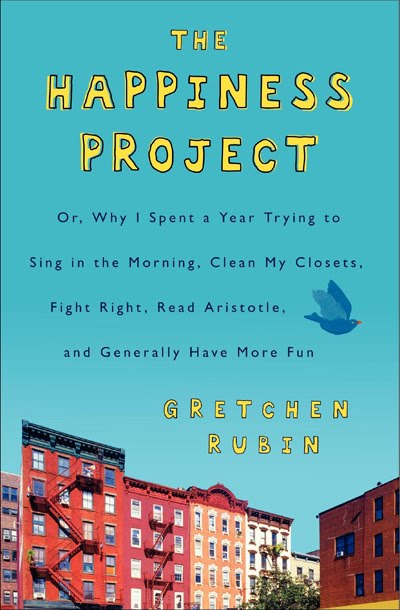
The Happiness Project by Gretchen Rubin

Release date (Australia): August 2010
Rating: 7.5/10

Gretchen Rubin had an epiphany one rainy afternoon in the unlikeliest of places: a city bus. "The days are long, but the years are short," she realized. "Time is passing, and I'm not focusing enough on the things that really matter." In that moment, she decided to dedicate a year to her happiness project. In this lively and compelling account of that year, Rubin chronicles her adventures during the twelve months she spent test-driving the wisdom of the ages, current scientific research, and lessons from popular culture about how to be happier. Each month she tackled a new set of resolutions: give proofs of love, ask for help, find more fun, keep a gratitude notebook, forget about results.

She immersed herself in principles set forth by all manner of experts, from Epicurus to Thoreau to Oprah to Martin Seligman to the Dalai Lama to see what worked for her—and what didn't. Her conclusions are sometimes surprising - she finds that money can buy happiness, when spent wisely; that novelty and challenge are powerful sources of happiness; that "treating" yourself can make you feel worse; that venting bad feelings doesn't relieve them; that the very smallest of changes can make the biggest difference - and they range from the practical to the profound.

I’m finding it hard to review this book because I really enjoyed it but I’m not quite sure what to write about it. Gretchen Rubin’s writing is conversational and funny, despite the fact that this somewhat biography could also be put into the self-help section in a bookstore. It’s realistic about the average person’s life and their level of ability to include her ideas and suggestions into their busy schedules.

The time to start exercising, stop nagging, and organise our digital photos was when everything was going smoothly. I didn’t want to wait for a crisis to remake my life.

One aspect I loved about this book is that Gretchen has obviously done a significant amount of research into the psychology and history of happiness, which I found interesting. She doesn’t rely on it in her own story of happiness, but manages to incorporate the research into what she did and why. Gretchen is also well-read on subjects such as religion, parenthood, general health and work.

"Nothing,' wrote Tolstoy, 'can make our life, or the lives of other people, more beautiful than perpetual kindness."

I enjoyed this book because it gave me some small manageable ideas on how to make life happier, which is important in a year that has been quite full of stress and anxiety. I feel that this is what Gretchen Rubin was aiming to do, giving people manageable ideas on how to make their lives happier without having to jet off to Italy for a year or do something drastic like quit their job. And for this, she succeeds.

Thursday, August 26, 2010

The Worst Thing She Ever Did by Alice Kuipers

Release date (Australia): 1 May 2010
Rating: 8/10

Sixteen-year-old Sophie is convinced her life is OK now, if only she could just be allowed to move on from what happened last summer. Sure, her mother is crazy and all of her friends treat her as if she’s made of glass, but she’s FINE. She just wishes she could forget about Emily. When her therapist – whom her mum makes her go and see – suggests she keep a diary, Sophie realises that the panic attacks she’s suffering from might, in fact, be a sign that she’s actually not OK, at least not yet. Gradually, though, with the help of the new girl at school, and, eventually, her mother, Sophie finds strength in herself and those around her. And as she allows herself to remember, she also begins to forgive.

I am currently taking forever to read the book I’m currently reading, even though it is brilliant, but I just have been really busy. So I thought I’d do an update on a book I read earlier this year because I thought it was wonderful. (As a side note, this book is called Lost For Words in the United States.)

Written in diary format, which I know is not everyone’s cup of tea, but in this case I think it really suits the story and the character of Sophie. At times a typical teenager, feeling like she has no one to confide in and no one that understands what she is going through, she is also dealing with a tragedy that no human being should have the endure. The details of this are pointedly left hazy with small hints given as the book progresses. I find this technique sometimes frustrating in books, but in The Worst Thing She Ever Did I think it works incredibly well and you get to ‘know’ Sophie before you know exactly what has happened to her and her family.

Love, sisterhood, friendship, family, post-traumatic stress disorder, death, and panic attacks are all dealt with in this story with eloquence and beauty. But it’s not all gloom and doom, with enough light-heartedness of other aspects of the story to prevent it from being depressing. I think it’s an important read and well worth the sometimes heart-wrenching content. Without giving anything away, it’s a book that I found moving and beautiful and touched on an event close to my heart.

Wednesday, August 11, 2010

Pretty Bad Things by C.J. Skuse

Release date (Australia): 1 August 2010
Rating: 8/10

Twins in Candy-Store Crime Spree...
I know what you’re thinking. Tearaway Teens. Yadda yadda. Maybe you’re right. But we’re all out of choices. Last time we made headlines, Beau and I were six-year-old ‘wonder twins’. Little kids found alive in woods after three days missing, looking for our dad. We’ve just hit sixteen and life’s not so wonderful. In fact, it sucks out loud. Still no Dad. Still lost. Still looking. But now we’ve got a clue to where Dad could be. Everything’s changed. It’s a long shot but we’ve nothing to lose.

I loved this book far more than I expected to. I was halfway through another book and just felt like reading something easy and light-hearted. I saw this on the shelf at work and figured it would be okay. But it was actually one of the coolest and most daring young adult books I have read in a while. I might be biased, though, because I am a big fan of Las Vegas. I’ve only spent one night there, but it was just fun. Being from the most isolated city in the world, perhaps I just loved the bright lights and the craziness. So finding out not only that this book featured twins as the main characters (another weird thing I love), but that it was primarily set in Vegas sold it to me then and there.

“It’s the living you want to be scared of, Beau, not the dead.”

The story alternates perspective from Paisley to Beau, the 16 year old twins at the centre of the story. Their mother is dead and their father has been absent since they were six years old, hence they have been living with their awful grandmother. Paisley is brash and crude and brave where Beau is quiet and determined and cautious. The contrast is perfect and the relationship is incredibly realistic. The strength of their relationship and the support and love they have for each other is evident from the beginning, as well as the sacrifices they would make in a heartbeat if it meant helping their sibling; this is the heart of the story for me. C.J. Skuse’s writing is almost flawless, incredibly witty and intelligent, with the points of view of the teenagers done perfectly.

Then I did something I haven’t done since I was a child. I screamed. It was the scream I screamed in the woods when I was six, on the second day of looking for Dad. It was the scream of lost causes.

There are some serious issues within the story, not only involving the search for their missing father, but issues of right and wrong, crime, sexuality and getting into dangerous situations, and many others. But there’s also Vegas, fun, wicked music, and awesome action. I hope this author writes another book soon, preferably involving Paisley and Beau again!

Monday, August 2, 2010

Favourite Author Focus: Francesca Lia Block

Your whole life you can be told something is wrong and so you believe it. Why should you question it? But then slowly seeds are planted inside of you, one by one, by a touch or a look or a day skateboarding in a park, and they start to burst out of old hulls shells and they start to sprout. And pretty soon there are so many of them. They are named Love and Trust and Kindness and Joy and Desire and Wonder and Spirit and Soulmate. They grow into a garden so dense and thick that it starts to invade your brain where the old things you were once told are dying.


I never really “grew out of” fairy tales, I still love them. I love the real ones, Hans Christian Andersen, Grimm, et al, but I admit to loving the Disney-fied versions too. I love happy endings and everything falling perfectly into place. It’s in such contrast to real life and that is a significant part of why I loved stories that I could get lost in while I was growing up. I could forget about other scary things like surgery and pain (in the past, present or future) and live someone else’s life for a while. My love for fairy tales is primarily what brings me to write about the beautiful stories of Francesca Lia Block.

Magic can be found in stolen moments.

I started reading Francesca Lia Block in 2001 after reading her name being mentioned by some people on a band’s message board. I may have been a little ‘old’ at 16 to start reading her books, but I have never been bothered by reading books intended for audiences older or younger than myself: as long as they are well-written. It’s probably why I was reading George Orwell's 1984 at age 12, but also read Lauren Oliver's amazing Before I Fall at age 25. Francesca Lia Block’s books were (and are) virtually impossible to find in Australia, so I ordered The Rose and the Beast from Amazon because the subtitle, “Fairy Tales Retold” intrigued me. To this day, I consider this to be my favourite book of hers partly because it was the first I read and partly because it is literally fairy tales retold, which naturally I loved.

Sometimes you fall, spinning through space, grasping for the things that keep you here. Sometimes you catch them. Sometimes you don't. Sometimes they catch you.

Through The Rose and the Beast, I fell in love with Francesca Lia Block’s incredible use of language. It is fluid like poetry and the imagery is stunning. I went on to read the Weetzie Bat books (now in a collection called Dangerous Angels) within a month or so and she became one of my top five favourite authors of all time. The way she writes about love, family, sexuality, life, happiness, depression, self-injury, suicide, anything and everything, is done in such an original and creative way that I am yet to come across another author like her. I also admit to adoring the cover art of her books; this a significant part of what drew me in to want to know more about this author and her stories.

You make me feel like I have wings when you touch me.

I think Francesca Lia Block is an important author for teenage girls; I think it’s an incredible shame that her books are not really known here. I really believe that reading her books earlier in my teenage years would have helped me cope with some of the things I went through, largely due to the significant topics she covers in her books without being too opinionated. The stories she creates are, simply, beautiful.

Love is a dangerous angel.